
Air Source Heat Pumps: Are They Right for Your Home?
A straightforward guide to heat pump suitability, efficiency, noise, radiators and what to expect from a professional home survey.
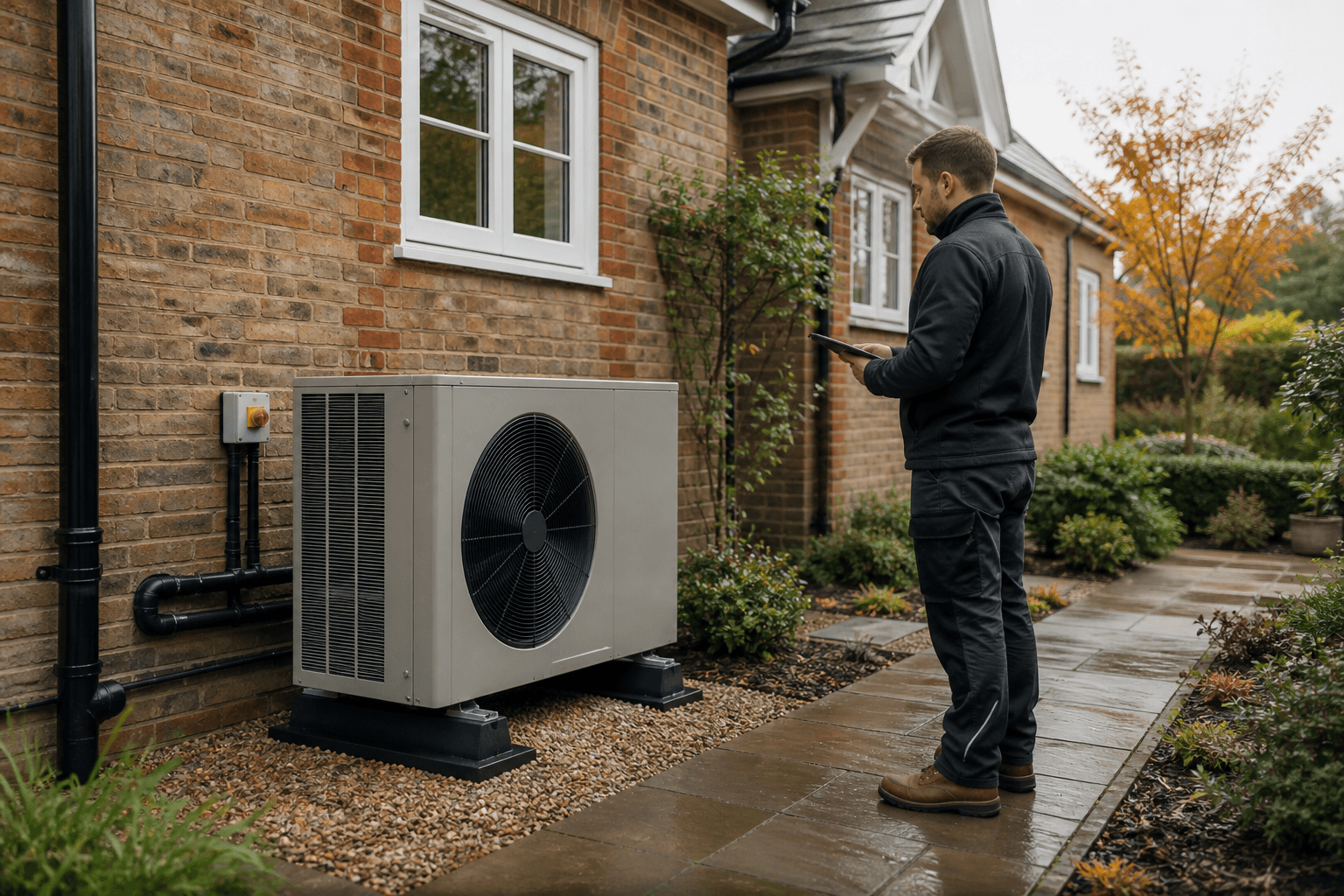
An air source heat pump takes low-temperature heat from the outdoor air and upgrades it for space heating and hot water. It can operate in cold weather, but the quality of the design and installation has a major influence on comfort and running performance.
Suitability is not decided by the age of the property alone. The surveyor needs to understand the heat loss of every room, the available outdoor space, the existing heating system and the household’s hot-water needs.
How an air source heat pump works
The outdoor unit absorbs heat from the air into a refrigerant circuit. A compressor raises the temperature, and the heat is transferred into the home’s heating and hot-water system. Electricity powers the process, but the useful heat delivered can be greater than the electrical energy consumed.
Heat pumps generally work most efficiently when producing water at a lower temperature than a traditional boiler. The system compensates by running steadily and using appropriately sized radiators or underfloor heating.
What makes a home suitable?
A suitable property has a practical outdoor position for the unit, enough electrical capacity, space for the necessary indoor equipment and a heat distribution system that can keep each room comfortable at the design temperature.
Good insulation is helpful because it lowers heat demand. However, suitability should be established through calculations and a site visit rather than a blanket rule about property type.
- Room-by-room heat-loss figures
- Current radiator sizes and pipework
- Outdoor airflow and maintenance clearances
- Hot-water cylinder requirements
- Electrical supply and controls
- Planning and neighbour considerations where applicable
Will the radiators need replacing?
Some existing radiators may be large enough; others may need to be upgraded. The answer depends on each room’s heat loss and the selected system temperatures. A proper design checks emitter output room by room.
Improving insulation first can change these calculations. Reducing heat loss may allow smaller upgrades and helps the system run at a lower, more efficient temperature.
Noise, placement and appearance
The outdoor fan and compressor produce sound, so placement should account for nearby windows, boundaries and reflective surfaces. The unit also needs clear airflow and safe access for servicing.
A thoughtful installer will discuss the route of pipework, drainage, base or wall mounting and the visual impact before finalising the location.
Controls and day-to-day use
A heat pump often works best with longer, steadier heating periods rather than short bursts of very hot water. Weather compensation can adjust system temperature as outdoor conditions change, helping maintain comfort efficiently.
The installer should explain schedules, hot-water settings and what to expect during colder weather. Clear handover information is as important as the equipment itself.
What to expect from a heat pump survey
The survey should examine building dimensions, construction, insulation, windows, ventilation, existing emitters, hot-water demand, outdoor siting and electrical requirements. You should receive a proposal that explains system size and any associated work.
Evergreen Sustainable Energy designs and installs air source heat pump systems around the property rather than selecting equipment from floor area alone.
Frequently asked questions
Do air source heat pumps work in winter?
Yes. Modern systems are designed to extract heat from outdoor air in cold conditions. Correct sizing and system design are essential for reliable winter comfort.
Can a heat pump work with existing radiators?
Often at least some radiators can remain, but every room should be checked. Lower water temperatures may mean selected radiators need to be larger.
Should I insulate before installing a heat pump?
Improving insulation can reduce heat demand and may reduce the system or radiator upgrades required. A survey can identify which improvements are worthwhile.
Get advice tailored to your home
Our team can assess your property and explain the options clearly, with no obligation.