
Loft Insulation: A Complete Guide for UK Homeowners
Learn how loft insulation works, when it needs attention and how to prepare for a safe, long-lasting installation.
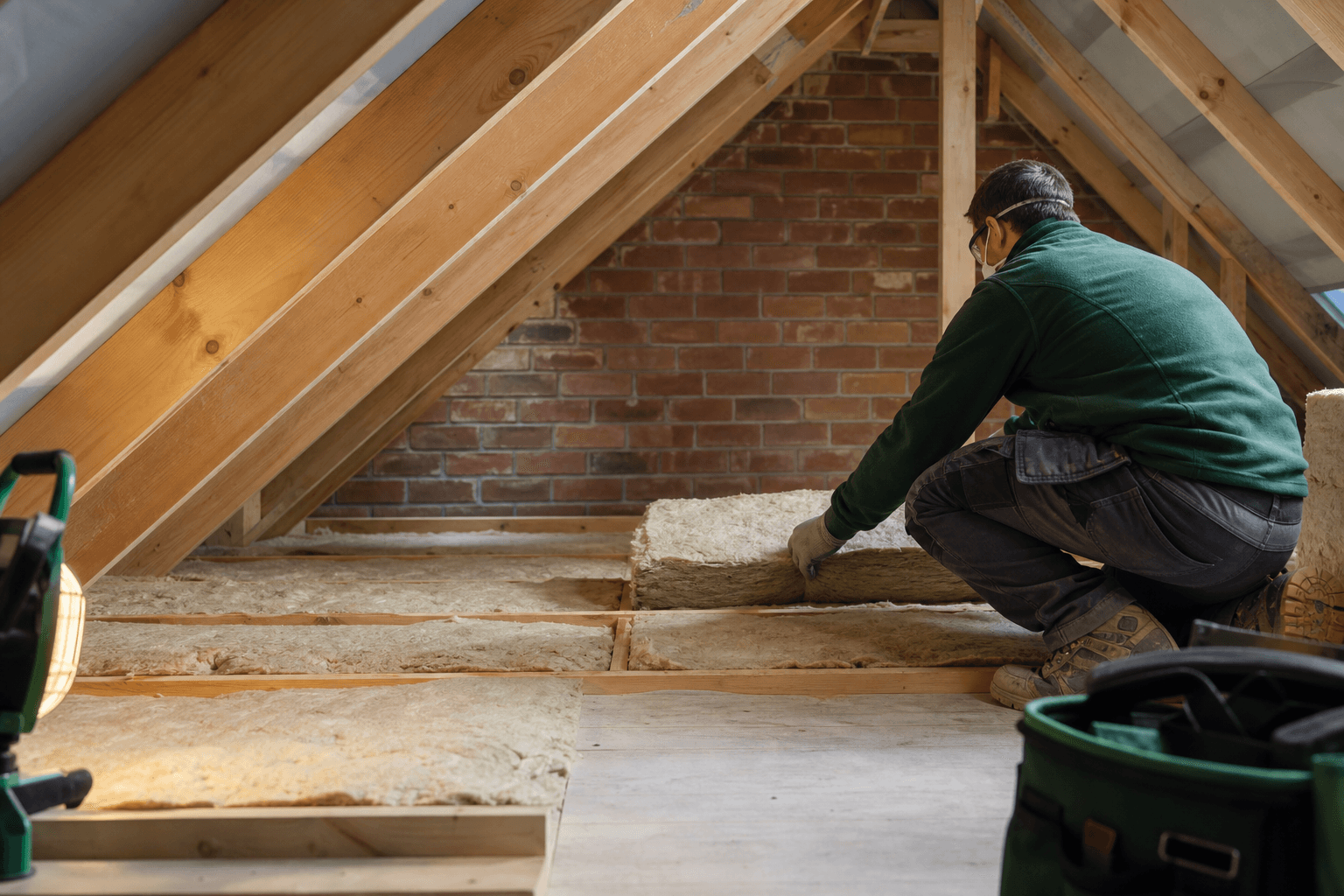
Loft insulation slows the movement of heat between the rooms below and the unheated roof space. When it is continuous, dry and correctly fitted, the home is easier to keep comfortable and the heating system has less work to do.
The detail matters. Gaps, compressed insulation, covered ventilation routes and unsafe treatment around electrical equipment can undermine an otherwise good installation. That is why the condition of the loft should be assessed before simply adding another layer.
How loft insulation works
Insulating material traps pockets of air and slows heat transfer. In a conventional cold-roof loft, insulation is normally installed at ceiling level between and over the joists, leaving the loft space above outside the heated envelope.
A continuous layer performs better than a patchwork. Even small missed areas around the hatch, pipes or awkward corners can create cold spots, so installation quality is central to the result.
Signs your loft insulation needs attention
You do not need to wait for a complete failure. Uneven room temperatures, high heating demand, visible gaps or thin and flattened material are all reasons to inspect the loft. Water staining or a persistent musty smell should be investigated before new material is installed.
Older insulation is not automatically ineffective, but it may have settled, been disturbed by storage or building work, or no longer form an even layer.
- Insulation is patchy, damp or heavily compressed.
- The loft hatch feels noticeably cold or draughty.
- Boarding has been laid directly on top of insulation.
- Eaves vents have been covered.
- Pipework or tanks in a cold loft are not adequately protected.
Choosing an insulation approach
Mineral wool rolls are widely used in accessible lofts because they can form layered coverage between and across joists. Other systems may suit restricted spaces or particular roof constructions, but the product must match the building and be fitted to its technical guidance.
Reflective or multi-foil products should be treated as designed systems, not interchangeable sheets. Their performance depends on correct air gaps, joint treatment and the full construction specified by the manufacturer.
Ventilation and moisture control
Insulation changes surface temperatures, while everyday activities add moisture to the indoor air. Bathrooms and kitchens need effective extraction, and the roof ventilation strategy must remain clear and continuous where required.
New insulation should never be used to hide an active leak or condensation problem. The source should be identified and the area allowed to dry before work continues.
Combining loft insulation with storage
A well-designed raised loft floor creates a stable storage platform above the insulation layer. It preserves thermal performance and prevents people from stepping between joists or placing weight directly on the insulation.
Safe access also matters. A suitable hatch, securely installed ladder and adequate lighting make the space easier to use without compromising the work below.
What a professional loft survey should cover
A survey should record access, joist layout, existing materials, ventilation, signs of moisture, electrical services, water tanks and how the space is currently used. The proposal can then define removals, preparation, coverage and any raised boarding or access upgrades.
Evergreen Sustainable Energy provides loft insulation, removal of unsuitable old material, raised boarding, hatches, ladders and spray foam assessment as part of a coordinated loft service.
Frequently asked questions
Can new loft insulation go over old insulation?
Sometimes, if the existing material is dry, clean, safe and correctly positioned. Damp, contaminated, damaged or unsuitable material may need removal first.
Can I still use my loft for storage?
Yes. Raised loft boarding can create storage space while leaving room for the insulation underneath. Boards should not compress the insulation.
Does a loft hatch need insulation?
Yes. The hatch is part of the thermal layer and should be insulated and draught-sealed while remaining easy to operate.
Get advice tailored to your home
Our team can assess your property and explain the options clearly, with no obligation.